
Automotive interior and exterior trim faces a persistent pair of conflicting requirements: a visible carbon-fibre weave on the surface, and a cost structure quoted like a production part.
The cost of an all-carbon part lies in forming hours — lay-up, cure, sanding and painting, none of which can be eliminated. Injection moulding is fast and cost-efficient, but it cannot deliver the weave.
The contradiction only looks unsolvable because of one assumption: a part must be made from a single material.
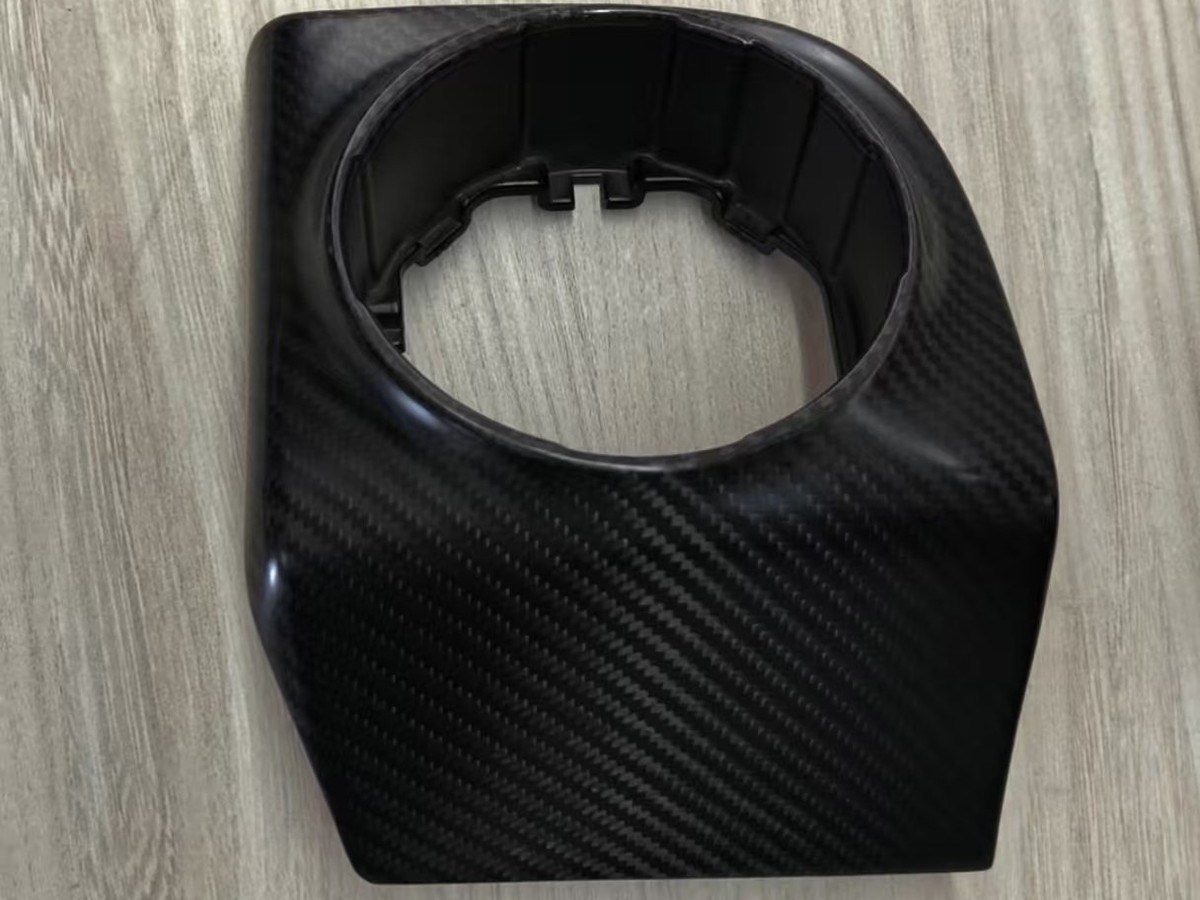
Appearance and structure need not share a material
They can be separated and still completed in a single process step.
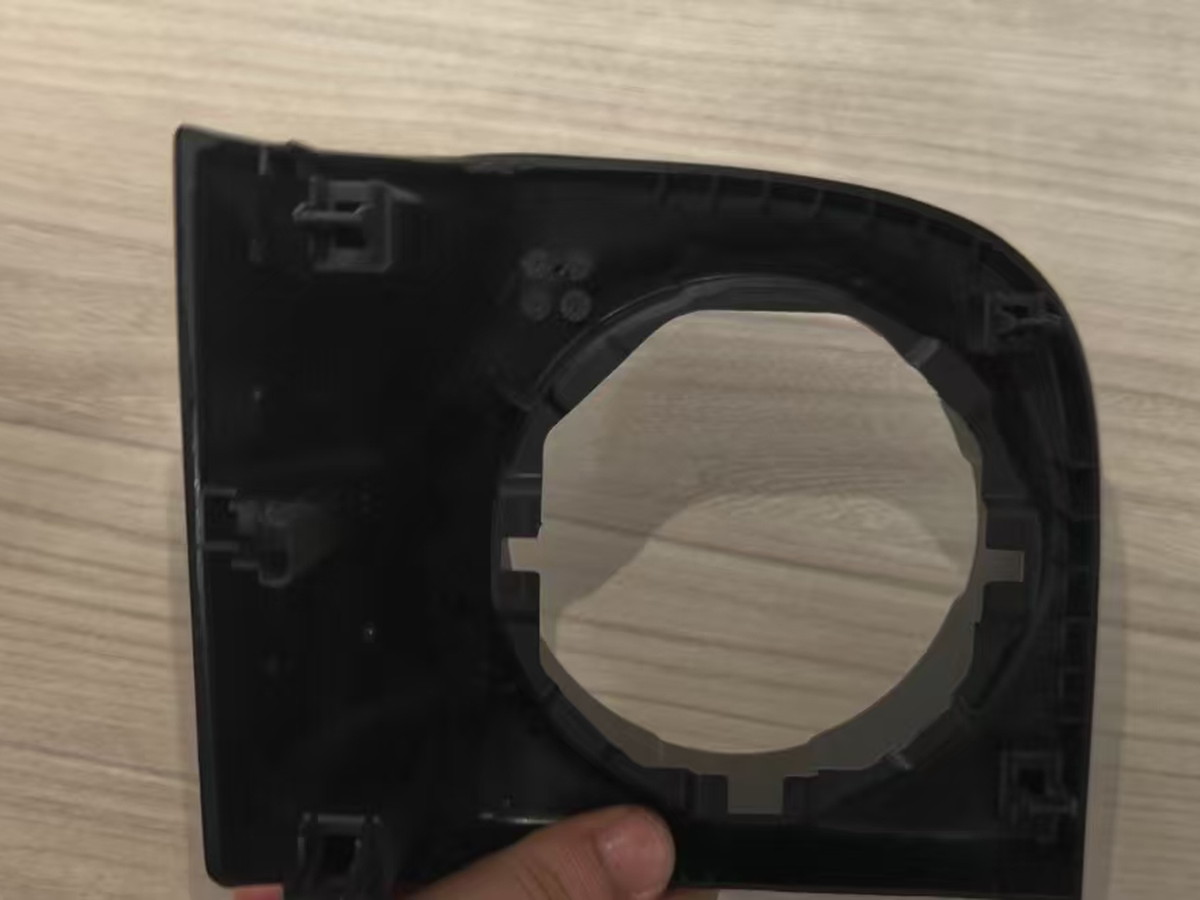
The carbon preform serves as both the visible layer and the structural layer — a consolidated thermoplastic composite sheet in its own right. The moulding compound forms the back: ribs, clips, inserts, and all assembly, fixing and load-bearing features.
One resin, one mould
The preform and the moulding compound use the same thermoplastic resin and are formed by injection-compression in one shot: the preform is placed in the mould, the mould closes, the melt is injected and encapsulates the preform, and the two fuse at the interface through resin welding rather than adhesive bonding.
The shared resin enables interface fusion; in-mould injection-compression ensures that fusion occurs during forming — eliminating delamination concerns.
Preform in, complete part out
Preform in, mould closed, complete part out: appearance, structure and assembly features are all in place in one shot. Secondary bonding, clip-on fasteners and the related assembly operations are eliminated. Painting remains; the assembly chain is removed.
Cost: the money is on the visible face
The back is costed as an injection-moulded part, not as a carbon-fibre part. Compared with a hand-laid carbon-fibre part, unit cost is reduced by approximately 50%.
Capacity: 400,000 parts per year
12 cavities, one part per cavity per cycle, 7-minute cycle — approximately 103 parts per hour. This product ships 400,000 parts a year.
The rule
Two materials, one process step.
Visible face in composite, back in moulding compound — and they become one part only when the resin is the same and both are formed in the same mould by injection-compression.
Volume economics, with a visible carbon weave and full structural features.