
Some equipment is designed around an overhaul cycle: stop every two years, open it up, replace the seals, re-apply sealant, close it. That rhythm is written into the maintenance manual, and into the customer's definition of reliable.
This part was switched to carbon fibre because it lacked stiffness; the seal was the scope we were brought in to solve. The machine works in heavy dust.
We proposed making the seal one-time: at the two-year stop, no opening, no seal replacement, no sealant.
The customer's first reaction was to refuse. The reason was direct: a seal that cannot be serviced on site leaves the risk with the user.
What the customer rejected was "not serviceable"; the problem lay in "serviceable" itself
The objection is half right: a one-time seal really has no second chance. The question is how the existing "serviceable" process was being used.
At each two-year stop, the customer's own maintenance team opens the machine, replaces the seals and applies sealant on site. Sealant thickness, surface cleanliness, cure conditions, operator technique — none of these four can be controlled in the field, especially with dust present.
The data is clear: with a rework opportunity every two years, the leak rate was still 15%.
The issue was not too few chances. It was that the opportunity itself could not be executed well.
The fix: cancel the step, not reduce its frequency
The sealing face is formed in a single shot in the factory, where environment, equipment and inspection are all controlled; a locating step holds compression at 20–30%; on site the joint is never opened — only fastening and visual inspection are performed.
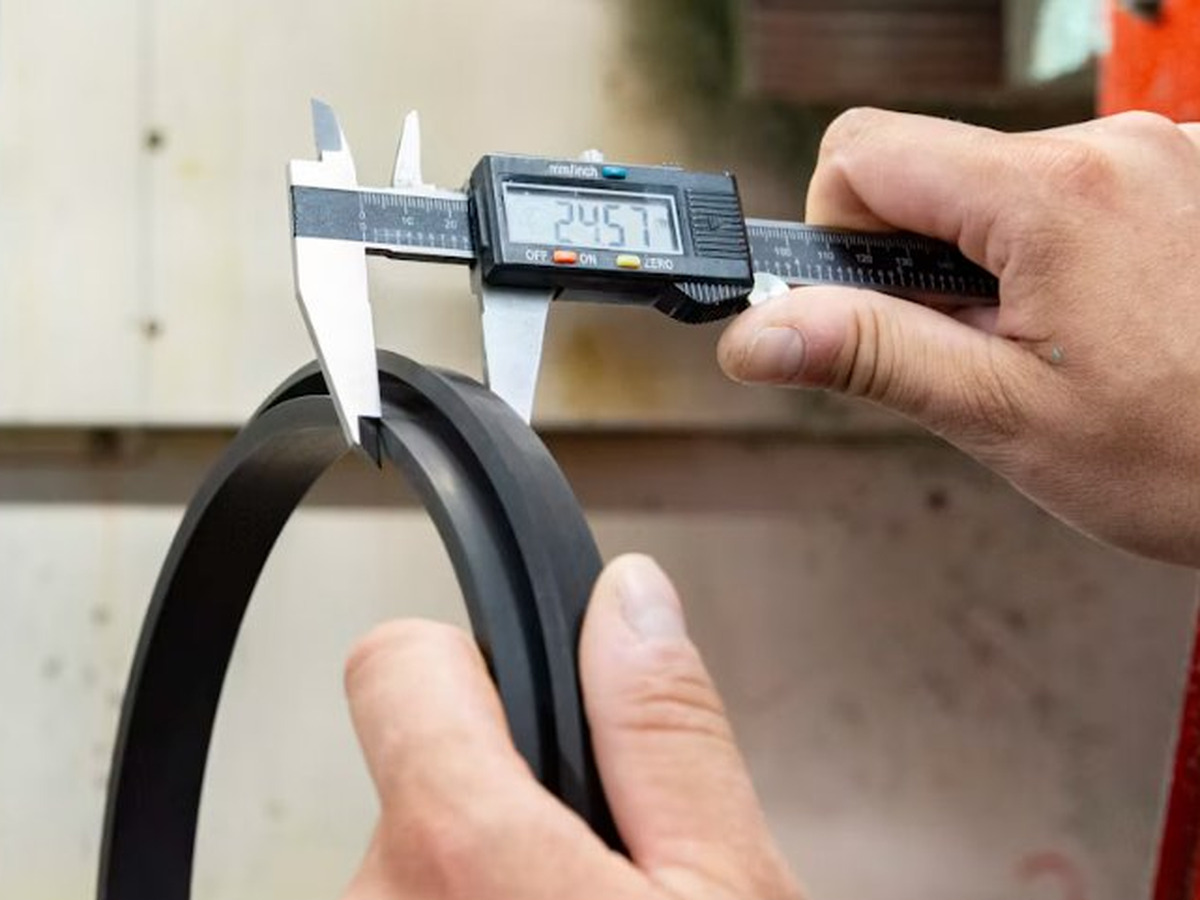
For a one-time seal to hold, inspection has to move upstream: a leak has to be found in the factory, not on site two years later.
Only then does "one-time" really hold: not "nothing to look after," but "no more on-site work that is bound to be done badly."
Result
The overhaul interval is unchanged at two years; at that stop, no seals are replaced and no sealant is applied.
Leak rate: 15% → 3%
Downtime per stop: 4 hours → 50 minutes
The first unit has been in service for over three years and has completed a full overhaul cycle.
The rule
Maintenance-free does not mean eliminating maintenance; it means moving the uncontrollable on-site process upstream, to where it can be done well and verified.